
My First Lesson in Downtime Data
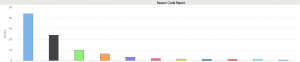 When I was a junior process engineer working in a plant, one of my Monday morning responsibilities was preparing the downtime summary from the weekend.
I usually dreaded it.
The task itself was tedious but manageable. I would go through each Excel shift report, extract the downtime entries and reasons, correct spelling mistakes, and then consolidate multiple descriptions of the same issue into a single bucket of codes.
Only after all that work could I build a clean Pareto chart and add it to the weekly operations summary presentation.
All in, it took about an hour every Monday morning.
The real pain came later.
When the Data Hit the Meeting Room
Once the downtime report was presented to operations and maintenance, the conversation almost always went off the rails.
What actually happened?
Is this downtime coded correctly?
Who was on shift last night that can explain this?
The discussion quickly turned into a blame game. Operators questioned the codes. Maintenance questioned the descriptions. Supervisors tried to reconstruct events from memory.
By the end of the meeting, a significant amount of time had been consumed across multiple roles, and yet very little had changed. There was rarely a clear action plan. Even more rarely was there a meaningful path to prevent the same issues from happening again.
What remained was frustration.
The Real Problem Was Not Effort
Looking back, the issue was not a lack of engagement. People cared. Everyone wanted to improve performance.
The problem was that our downtime capture, management, and reporting process was fundamentally broken.
We relied on simplistic tools. We depended on multiple rounds of manual data entry. We worked from second and sometimes third hand information. By the time the data reached decision makers, it was already diluted, debated, and distrusted.
The data became something to argue about instead of something to act on.
A Lesson That Stuck With Me
That experience shaped how I approached downtime data for the rest of my career.
It taught me that collecting downtime is not the same as understanding production loss. It showed me that poor data processes waste far more time downstream than they ever save upfront. Most importantly, it reinforced that data must support decisions, not meetings.