
Minor Stops Aren't Really Minor
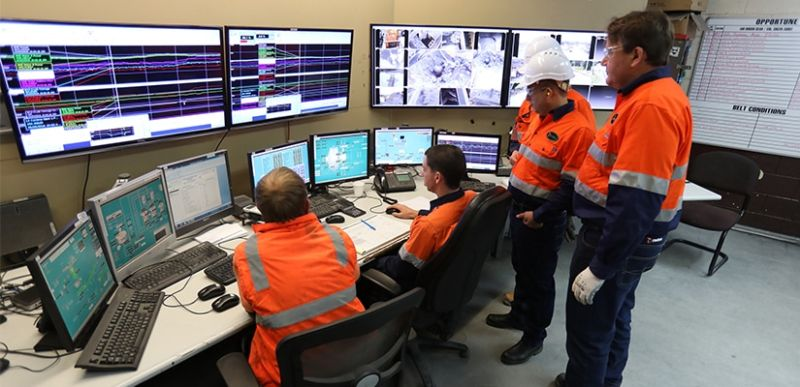 When most plants implement a downtime tracking system, they face an unavoidable challenge.
Capture enough events to identify meaningful improvement opportunities, but not so many that operators and engineers spend more time classifying downtime than improving the process.
To strike that balance, most systems apply a minimum duration threshold before an event is considered downtime. Depending on the operation, that threshold might be one minute, five minutes, or even fifteen minutes.
Anything shorter is simply ignored.
At first glance, this approach makes perfect sense. During the early stages of a reliability program, the biggest opportunities almost always come from large mechanical failures, electrical outages, or process upsets that result in extended production losses. These events are highly visible, easy to justify investigating, and often deliver the fastest return on improvement efforts.
In those situations, spending valuable time analyzing dozens of thirty-second interruptions may not be the best use of resources.
The Point Where the Rules Change
As reliability improves, the nature of production losses begins to change.
The major failures become less frequent, maintenance practices mature, and equipment availability increases. This is when many operations discover that the largest remaining opportunity is no longer a handful of major breakdowns. Instead, it is dozens or even hundreds of small interruptions that occur throughout the day.
Individually, these events appear insignificant.
Collectively, they can represent just as much lost production as the large failures that originally received all the attention.
A five-minute stop may not seem worth investigating. Fifty five-minute stops certainly are.
Frequency matters just as much as duration.
The Hidden Cost of Minor Stops
There is another consequence of short-duration interruptions that is often underestimated.
Process instability.
A brief interruption rarely affects only the equipment that stopped. Modern processing plants operate as interconnected systems, where every disturbance creates ripple effects throughout the process.
A short stop can cause:
- Sizing circuits to lose steady-state operation.
- Flotation recovery to drift away from optimal performance.
- Gravity circuits to become unstable.
- Control loops to constantly adjust in response to changing conditions.
Although the actual downtime event may only last a few minutes, the process may require considerably longer to recover to normal operating conditions.
The production loss is often much greater than the downtime itself.
This is why minor stops frequently have an outsized impact on throughput, recovery, and overall plant stability.
Capturing More Data Without Creating More Work
The obvious solution might seem to be lowering the downtime threshold and recording every event.
Unfortunately, that often creates a different problem.
Operators become overwhelmed with classification requests. Engineers spend more time reviewing data than solving problems. Eventually, data quality declines because maintaining the system becomes more work than it is worth.
Instead of attempting to capture everything immediately, a phased approach is often much more effective.
1. Capture events automatically
Begin collecting short-duration events in the background without requiring operator interaction. This provides visibility into their frequency and cumulative impact without increasing workload.
2. Automatically classify by area or asset
Even if every event is not fully categorized, assigning basic context such as equipment area, production line, or asset is often enough to identify recurring patterns and emerging problem areas.
3. Introduce operator context selectively
Once the data reveals which short-duration events are truly significant, begin exposing only those events for operator review and classification. This ensures manual effort is focused where it delivers the greatest value.
Finding the Right Balance
The objective is not to record every second of every interruption.
The objective is to collect enough meaningful information to identify opportunities for improvement while keeping the system practical for the people who use it every day.
Automation should handle the repetitive work. Operators should provide the contextual information that only they can supply. Together, this creates a sustainable process that delivers actionable insights without drowning the organization in data.
When one area consistently emerges as a source of recurring minor stops, that is where deeper investigation and focused improvement efforts should begin.
Small Interruptions Can Become Your Biggest Opportunity
Major failures naturally demand attention because they are visible, disruptive, and expensive.
Minor stops are quieter.
But once the obvious reliability issues have been addressed, those small interruptions often become the largest remaining source of production loss. Their cumulative impact on capacity, recovery, process stability, and operating consistency can easily exceed that of the occasional major breakdown.
If your operation has already tackled the low-hanging fruit, the next breakthrough may not come from preventing another catastrophic failure.
It may come from finally paying attention to the small interruptions everyone has learned to ignore.